OVERVIEW
For my graduation project at Onze Kapel, a creative communication agency based in Haarlem, I developed Oknnect. It is an interactive tool designed to streamline collaboration between the design team and non-design colleagues. The platform enables employees without a design background to make small content adjustments independently, while maintaining brand consistency.
THE CHALLENGE
Collaboration between the design team and other departments often proved challenging. Employees who interacted directly with clients often received requests for minor content changes, such as text edits. Since they had no experience with Adobe software, they relied heavily on the design team for these minor adjustments. As a result, designers were often interrupted, diverting their focus from more complex tasks. This led to time loss and frustration on both sides. There was a clear need for a user-friendly solution that allowed non-design colleagues to perform simple edits independently, while preserving brand consistency.
THE SOLUTION
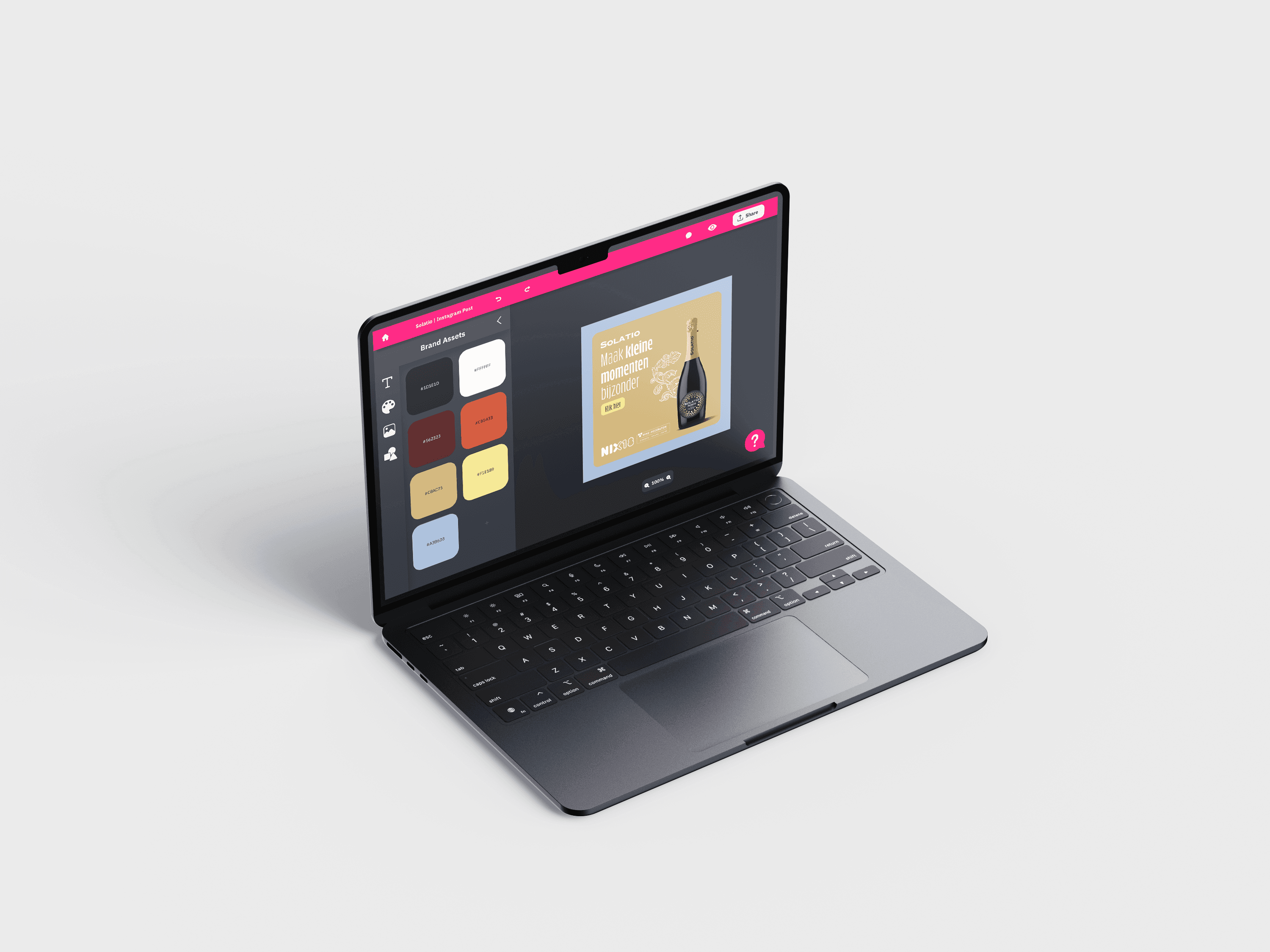
I designed the Oknnect prototype with fixed brand consistency guidelines, ensuring that colors, typography, and logos remained locked. Within these boundaries, users can make simple edits such as changing text, images, or colors. The platform features an intuitive interface with drag-and-drop functionality, previews (including Instagram grid view), an integrated feedback system, chat functionality, and clear help resources. Content can only be downloaded once approved by the design team. I refined the tool iteratively through co-creation sessions, expert reviews, and field trials.
THE RESULT
The prototype enables non-design colleagues to make small adjustments safely and independently, without compromising brand identity. This reduces interruptions for designers, streamlining the overall workflow.
The concept was well received during the final presentation and seen as a valuable foundation for further development.
For me, this project was an opportunity to combine research, UI/UX design, and service design into a prototype that directly responded to real user needs.